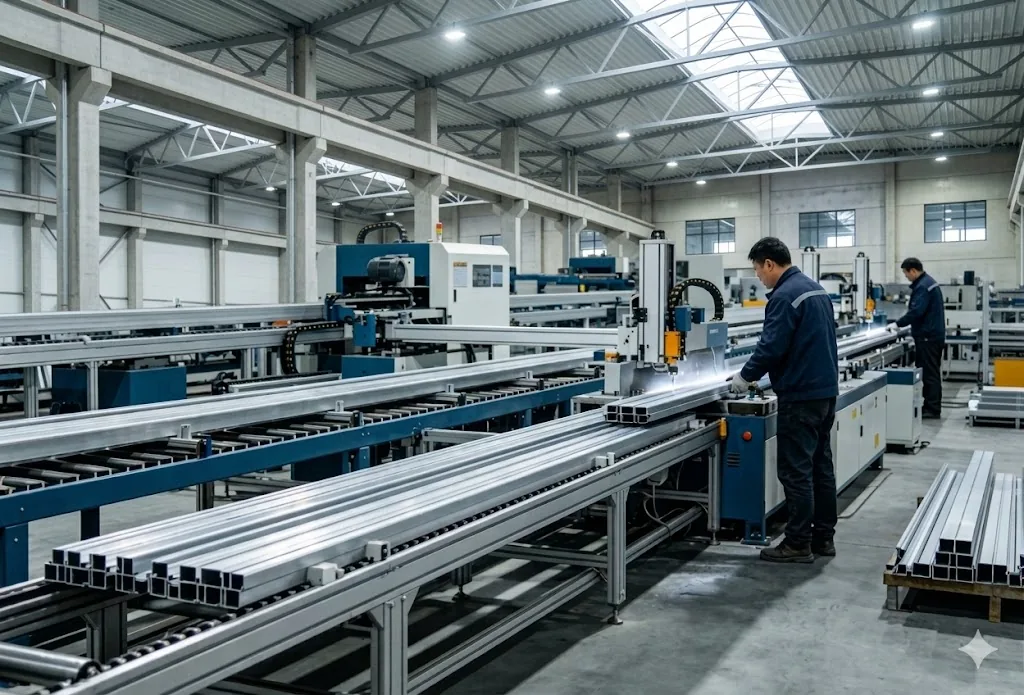
Road blocker manufacturer for vehicle checkpoints
Electro-hydraulic road blockers for high-security vehicle checkpoints.
High-security checkpoints
PLC control with encryption, 500 mm or 600 mm interception heights, IP68 protection and manual operation in a power cut. Container trucks under 220 tons can pass over the lowered blocker.
Specifications
Values from CAIMEN product documentation. Drawings for your project confirm final sizes.
Product views
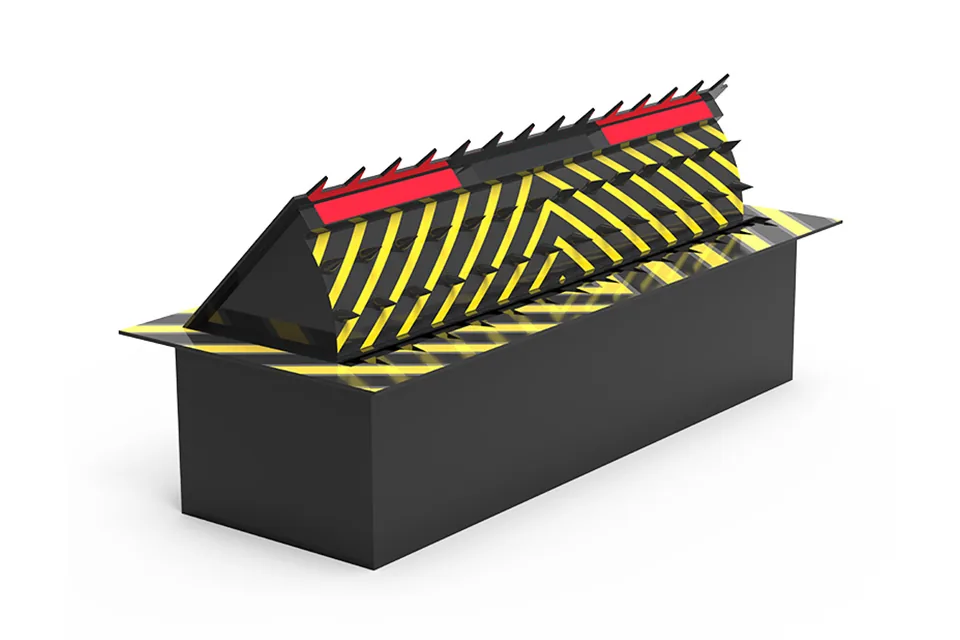
Overview
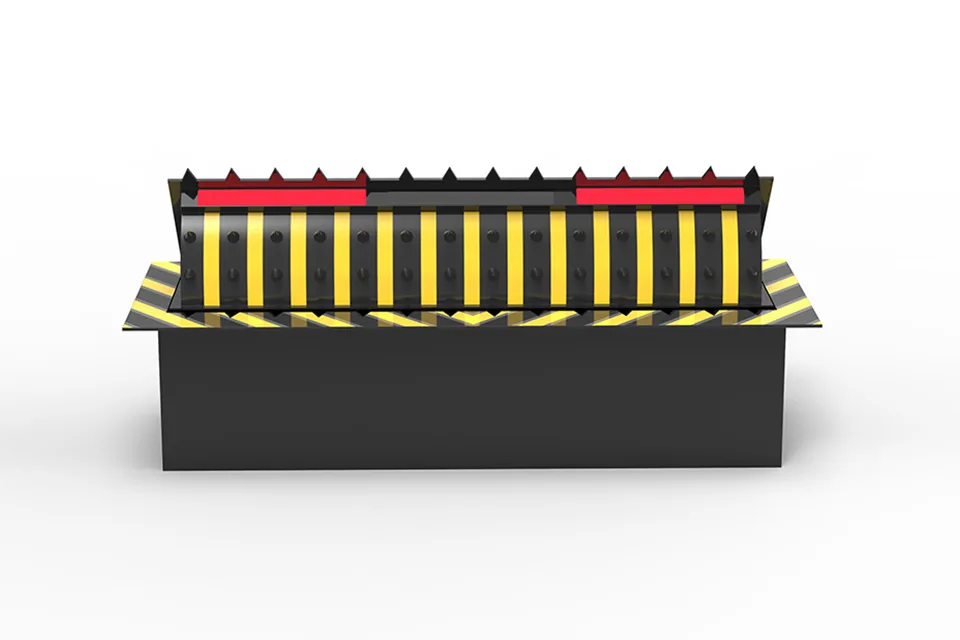
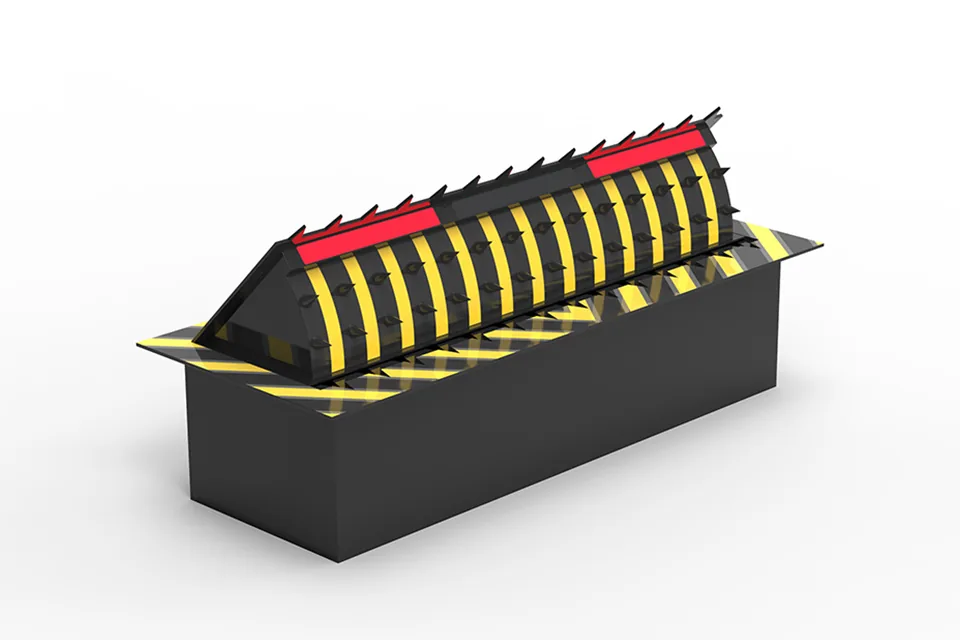
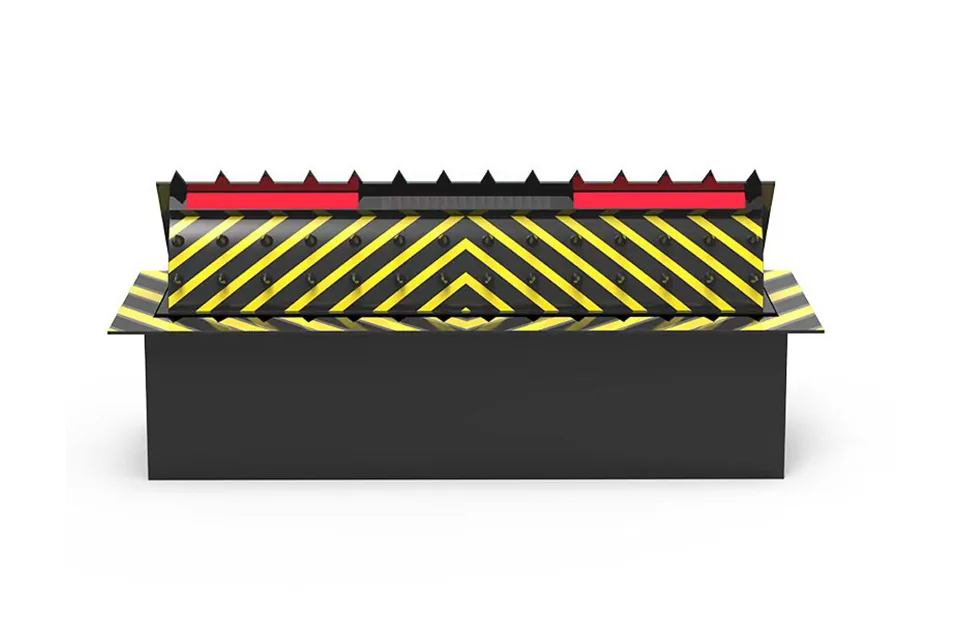
The CAIMEN Road Blocker is an electro-hydraulic road blocker that lifts a steel plate across a vehicle lane, then drops it flush with the road once a car is cleared. Checkpoints are what it's for. Think of a government gatehouse, a port truck lane, or a plant entrance where every vehicle stops first. CAIMEN is a Shenzhen-based manufacturer of gates and access control equipment, founded in 2013, supplying road blockers to distributors, installers and project buyers worldwide.
Most lanes are covered by two standard models. You get a 500 mm interception height from the CM-3M-20H500, in a 3000*1000*760 mm box, while the CM-3M-20H600 reaches 600 mm in a 3000*1100*760 mm box. A PLC runs the logic. The lifting is hydraulic.
One honest note up front. This is an access control barrier for busy lanes, and we don't claim an ASTM F2656 crash rating for it. If your spec calls for a rated anti-ram barrier, say so at the start.
Key features
Electro-hydraulic drive with PLC control
Hydraulics do the work here. Programming commands go through a PLC, and the whole system draws 3.75 kW on AC380V 50Hz, which means you'll need three-phase supply out at the lane. Rising and descending times? Each is rated at 1 to 4 seconds or less.
Heavy steel that trucks drive over
It's Q235 steel. You can order 16 mm, 20 mm or 25 mm panels, all on a 350 mm spine. Lowered, the plate takes container trucks under 220 tons rolling across it, which is what a port gate or a quarry exit asks of it.
IP68 protection for in-ground installation
A road blocker lives in a pit. Pits collect water, and this unit carries an IP68 rating, though you should still drain the pit properly. Out of the box it works from -30 to 75 °C. Cold site? Add the low-temperature device and the range stretches to -50 to 75 °C.
Two ways to control it, plus encryption
Guards can use the wireless remote, good for 50 to 100 m, or wired control from the booth. Inside the PLC sits a built-in encryption system, so nobody casually rewrites the command logic.
Links to the rest of your lane
Traffic lights, infrared sensors, ground loops and license plate recognition all hook into the linkage interface, among others. Here's how a typical checkpoint runs: the plate gets read, the light goes green, the blocker drops, a loop confirms the vehicle is clear, and up it comes again.
Visible day and night, works without power
You'll see it coming. LED warning lights are available in monochrome or multicolor, and 3M diamond grade reflective film covers the face. Lose power and your crew can still raise or lower the plate by hand. Noise while it's running stays at 60 dB or less.
Where it fits
Put a road blocker where a barrier arm isn't enough and the lane needs a hard stop. Good fits:
- Government and public building gatehouses, where every vehicle is checked before entry. See our government and public buildings page.
- Port, logistics and factory truck lanes carrying heavy container traffic. More on that in factory and logistics entrances.
- Checkpoints with a booth, where a guard wants wired control and a remote as backup.
- Cold-climate sites, with the low-temperature device fitted.
Got a wide plaza or a pedestrian zone instead of a single lane? Then a row of automatic bollards usually works better. Cars stop. People walk between the posts.
How to specify it
Measure the lane first. Box sizes run (2000-6000)*1000*760 mm, so one blocker spans most single lanes. Next comes height. Choose 500 mm or 600 mm interception height based on your vehicle mix and the site's security requirement; the 600 mm model (CM-3M-20H600) sits in a 3000*1100*760 mm box.
| Choice | Options | What drives it |
|---|---|---|
| Interception height | 500 mm or 600 mm | Vehicle mix at the lane |
| Panel thickness | 16, 20 or 25 mm | Site requirement, settle with CAIMEN at quote stage |
| Box length | 2000 to 6000 mm | Clear lane width |
| Warning light | Monochrome or multicolor | Site signaling rules |
| Low-temperature device | Fitted or not | Winter lows below -30 °C |
People underestimate the civil work. Delta Scientific's notes on wedge barriers point out that foundation strategy drives excavation, dewatering, utility relocation and schedule risk. Our advice is simple: get a drain line into the pit design early. And if your project needs crash-tested performance, ASTM F2656 is the reference; a rated product will be tested and labeled against it.
For a quote, send:
- Lane width and number of lanes
- Interception height and panel thickness
- Heaviest vehicle using the lane
- Power available (three-phase AC380V 50Hz is required)
- Devices to link: lights, loops, infrared, LPR
- Lowest winter temperature on site
Other barriers are on our products page. Production typically takes 15 to 20 days after drawing approval. Reach us through the contact page or at [email protected].
Sources
- Delta Scientific: Crash-Rated Wedge Barriers, Where They Outperform Gates and Bollards
- ASTM F2656/F2656M-23: Standard Test Method for Crash Testing of Vehicle Security Barriers
Product figures come from CAIMEN product documentation.
CAIMEN Road Blocker questions
Is the CAIMEN Road Blocker crash rated?
No, we don't claim an ASTM F2656 crash rating for it. It's an electro-hydraulic access control barrier made for checkpoint lanes, and when it's lowered, container trucks under 220 tons can pass over it. Does your project specify a crash-tested anti-ram barrier? Then tell us early, so we can talk through the options honestly.
What happens if the power goes out?
You can raise and lower the plate manually. Before any outage, agree with your security team which position the lane should default to. Then make sure every guard knows where the manual operation point is.
How fast does the road blocker rise?
Rising and descending are each rated at 1 to 4 seconds or less. That's quick enough to keep a busy checkpoint moving. Speed alone isn't the point, though: pair it with ground loops and warning lights so the plate never comes up under a vehicle that hasn't cleared the lane.
Can it work with license plate recognition?
Yes. License plate recognition connects through the linkage interface, along with traffic lights, infrared sensors, ground loops and other devices. Registered vehicles can then pass automatically, while the guard booth keeps wired or remote control for everyone else.
Quote for Road blocker
Send the size, quantity and destination port. We reply within 24 hours.
Or email [email protected]