Most buyers treat the aluminum vs steel gate question as strength against price. Wrong place to start. What decides it on a commercial site is the weight your operator hauls on every cycle, how quickly the frame corrodes in your particular air, and what your crew ends up patching in year six. Strength? Either metal, properly designed, is plenty strong for a perimeter.
So let's go factor by factor, the way a contractor or importer actually weighs a quote. And yes, we'll tell you where steel still wins. It does, sometimes.
Weight and drive load: where the bill really shows up
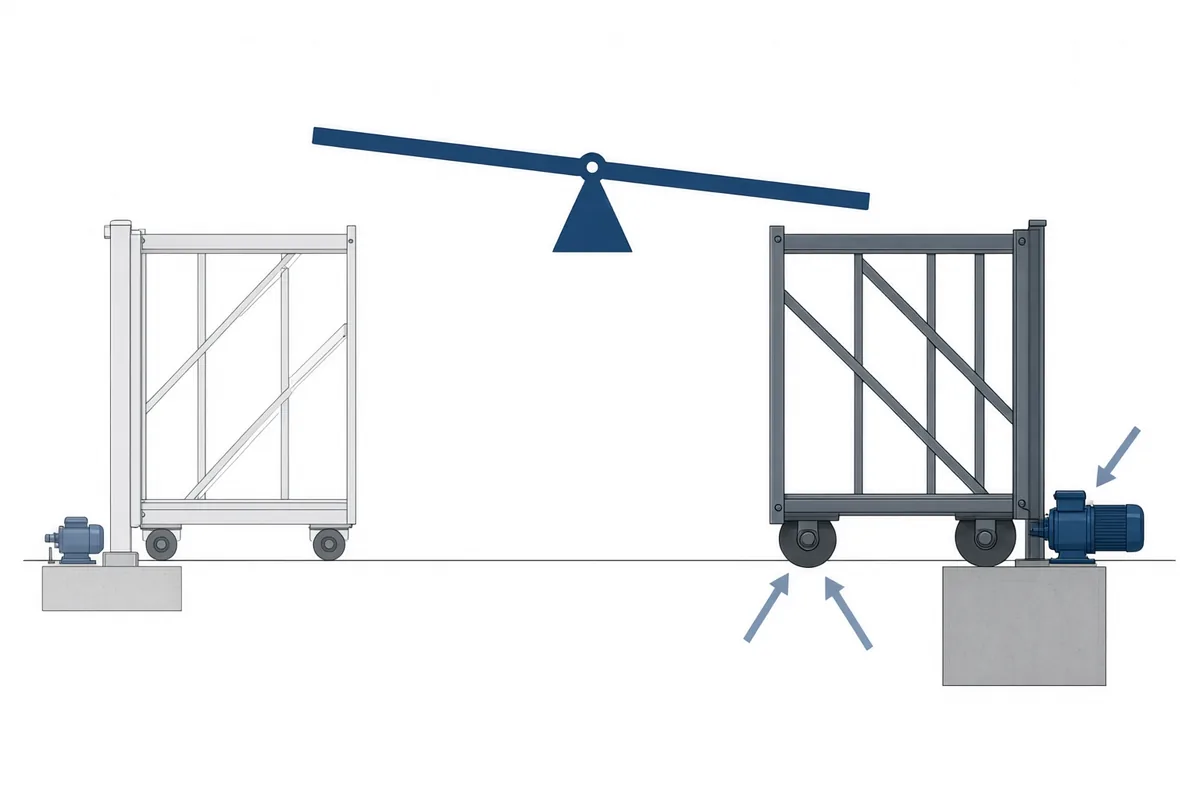
Density first. Aluminum's specific gravity sits around 2.7, iron's near 7.8, according to Kobe Steel's aluminum materials division. In plain terms, a solid aluminum part weighs roughly a third of its twin in steel.
Gates aren't solid blocks, though. To match steel's stiffness, aluminum profiles need deeper sections and thicker walls, so you won't save the full two thirds. You'll still save a lot.
And weight compounds. A heavy leaf wants a bigger motor, a longer counterweight tail if it's a cantilever, beefier rollers, a deeper footing, more torque every time it starts or stops. Picture a 12 m slider at a distribution center, opening for trucks every few minutes from 5 a.m. until midnight. Each of those runs speeds up and brakes the whole mass. Lighten the leaf and your wheels, chain or rack and gearbox all last longer.
Long openings are where the gap gets obvious. Our cantilever sliding gate rides on a 6005-T6 aluminum bottom beam, 302 x 213 mm, with walls up to 7.0 mm thick. We offer four 6005-T6 beam profiles, picked to suit the gate's length, height, infill and load. With that structure a single leaf reaches 28 m delivered length, and clear spans go to 18 m single or 36 m bi-parting. The drive? A 500 W variable-frequency motor at 18 to 22 m/min. Build that span in welded steel and you'd need a far heavier leaf and a bigger operator to push it.
Corrosion: rust versus oxide
This is the real split. Steel rusts, and rust doesn't stop on its own. Aluminum grows a thin, dense oxide film the instant air hits it, and that skin shields the metal below. Kobe Steel credits this natural oxide layer for aluminum's excellent corrosion resistance.
You can protect steel, of course. Hot-dip galvanizing is the usual route. The coast chews through zinc, though. According to the American Galvanizers Association, ordinary atmospheric categories don't cover structures within a mile of shore. Galvanized faces pointed at the ocean, somewhere between 250 feet and a mile out, have shown rust in five to seven years, it reports, while sheltered parts of those same structures held up much longer. Closer than 250 feet, splash and heavy salt spray count as aggressive. For sites that harsh, the AGA's answer is a duplex system: paint or powder over the zinc.
Steel by the sea can work. You're paying for two coatings, though, and every scrape from a reversing truck is a new rust starter.
Aluminum has weak spots too. Salt will pit it bare. Put it against steel or copper in a wet joint and galvanic corrosion eats the aluminum first. Good detailing isolates dissimilar metals and drains water off flat faces, which is exactly why the coating still matters on an aluminum gate.
Coating systems: what's actually on the metal
For long-term looks, the coating spec tells you more than the alloy. Whatever metal you're buying, ask the supplier which powder they use and what it was tested to.
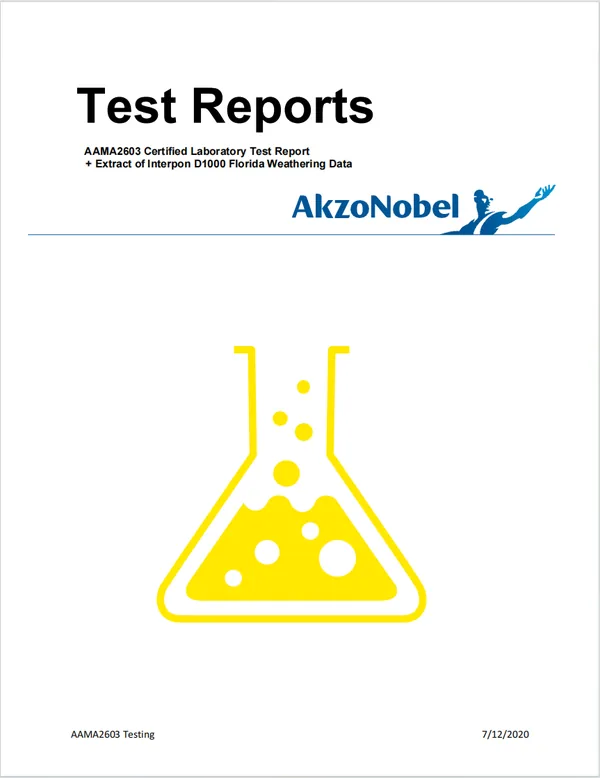
Standard on CAIMEN gates is AkzoNobel Interpon D1000, a powder tested to AAMA 2603 and Qualicoat Class 1. Need longer color and gloss retention? Interpon D2000 is the optional upgrade, a superdurable powder meeting AAMA 2604 and Qualicoat Class 2. We cure it with a dual high-temperature process: two coats, two bakes.
Know what those reports cover. They test the powder coating, not the complete gate. For D1000's AAMA 2603 report, Q-Lab exposed samples in South Florida for one year at 45 degrees facing south, and all of them passed. D2000 is judged on AAMA 2604 criteria after five South Florida years: color change of 5 delta E or less, chalking no worse than No. 8, gloss retention of at least 30%. Our coatings page has the rest.
Our take: if a gate is going to bake in direct sun for twenty years, the powder grade matters more than the color you choose.
Maintenance over the life of the gate
With steel, upkeep is a hunt for rust. Someone walks the line, spots chips and weld seams starting to bleed, wire-brushes them, touches up. Skip a season near the coast and that small job grows.
Aluminum upkeep is mostly mechanical. Rollers, guide wheels, fasteners. If you're near the sea, rinse the salt off with fresh water, something the AGA notes some owners also do for galvanized steel, especially on sheltered surfaces rain doesn't wash. With a high-grade architectural powder, you'll repaint far less often.
Modular build helps here. Our cantilever gates bolt together, so there's less welding on site, and the carriage, rollers and pull-rod parts can be serviced. A forklift clips a section? You swap a part. Nobody's cutting and re-welding a frame.
Side-by-side comparison
| Factor | Aluminum gate | Steel gate |
|---|---|---|
| Weight | About one third the density of steel; lighter leaf for the same size | Heaviest option; drives, rollers and footings must be sized up |
| Drive load | Smaller motor for long spans; less wear per cycle | More torque and braking every cycle |
| Corrosion | Self-protecting oxide film; watch for galvanic contact with steel | Rusts unless galvanized and coated; damage spreads from scratches |
| Coastal sites | Strong choice with a high-grade powder coat | Needs a duplex system (galvanizing plus paint or powder) |
| Fabrication | Extruded profiles, often bolted modular assembly | Welded frames, easy local repair by any welder |
| Design freedom | Custom extrusions, RAL colors, wood grain, long spans | Flat bar and tube shapes; ornamental work by forging |
| Best fit | Long sliding gates, coastal sites, high cycle counts | Crash barriers, road blockers, very high impact zones |
Design freedom and spec control
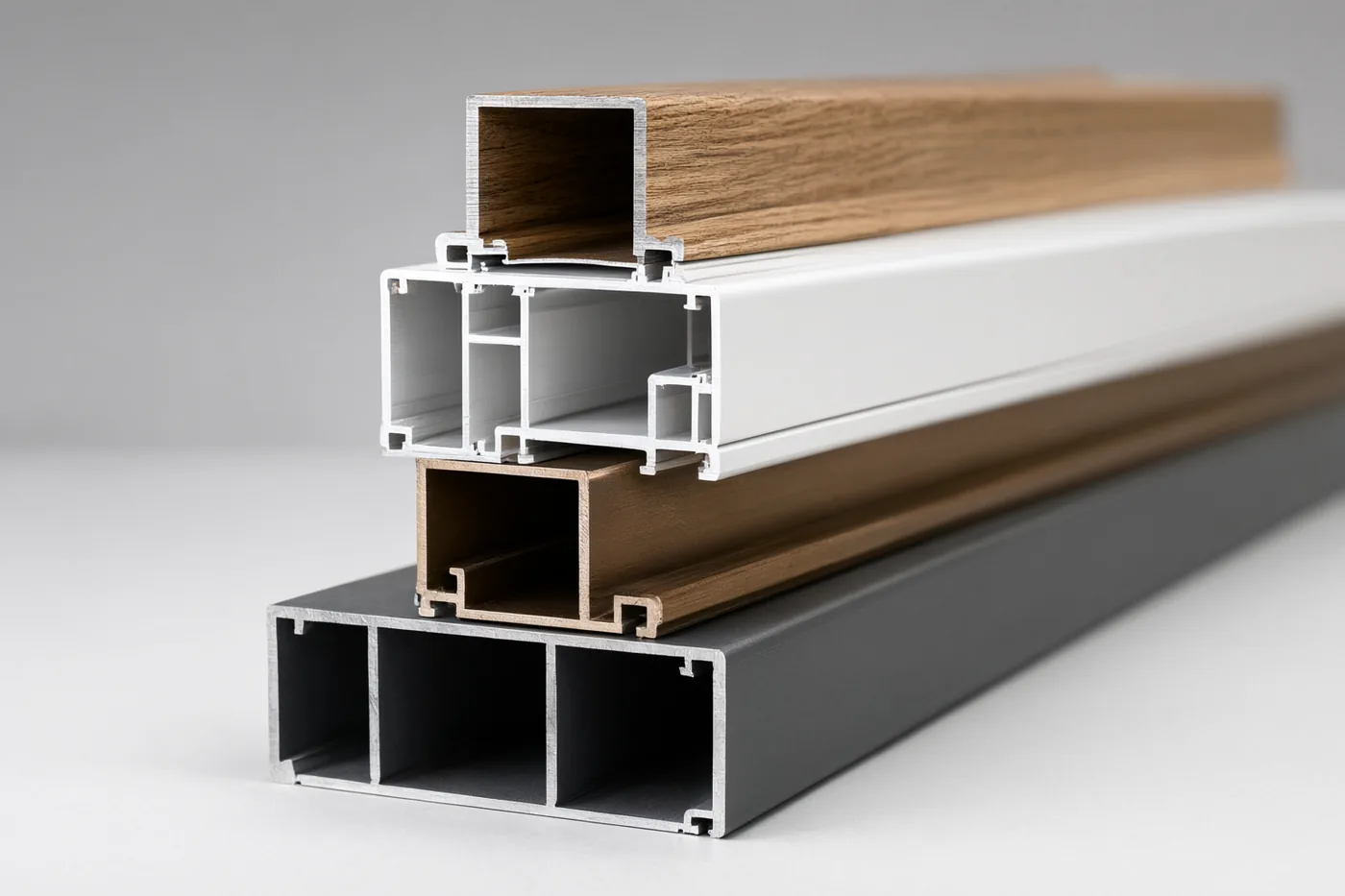
Extrusion is aluminum's quiet edge. Once the die's made, every profile comes out with an identical section, so deep beams, slim pickets and hidden cable channels can all live in one part. CAIMEN gates use 6005 and 6063 aluminum alloys. The 6005-T6 goes into structural beams that carry load; 6063 handles vertical bars and inner frames, where finish and shape count for more.
You can verify what you're getting, too. Every batch of profiles for our aluminum swing gates ships with a third-party inspection report, so your QA team doesn't have to take our word on alloy or wall thickness. Ask any supplier for the same.
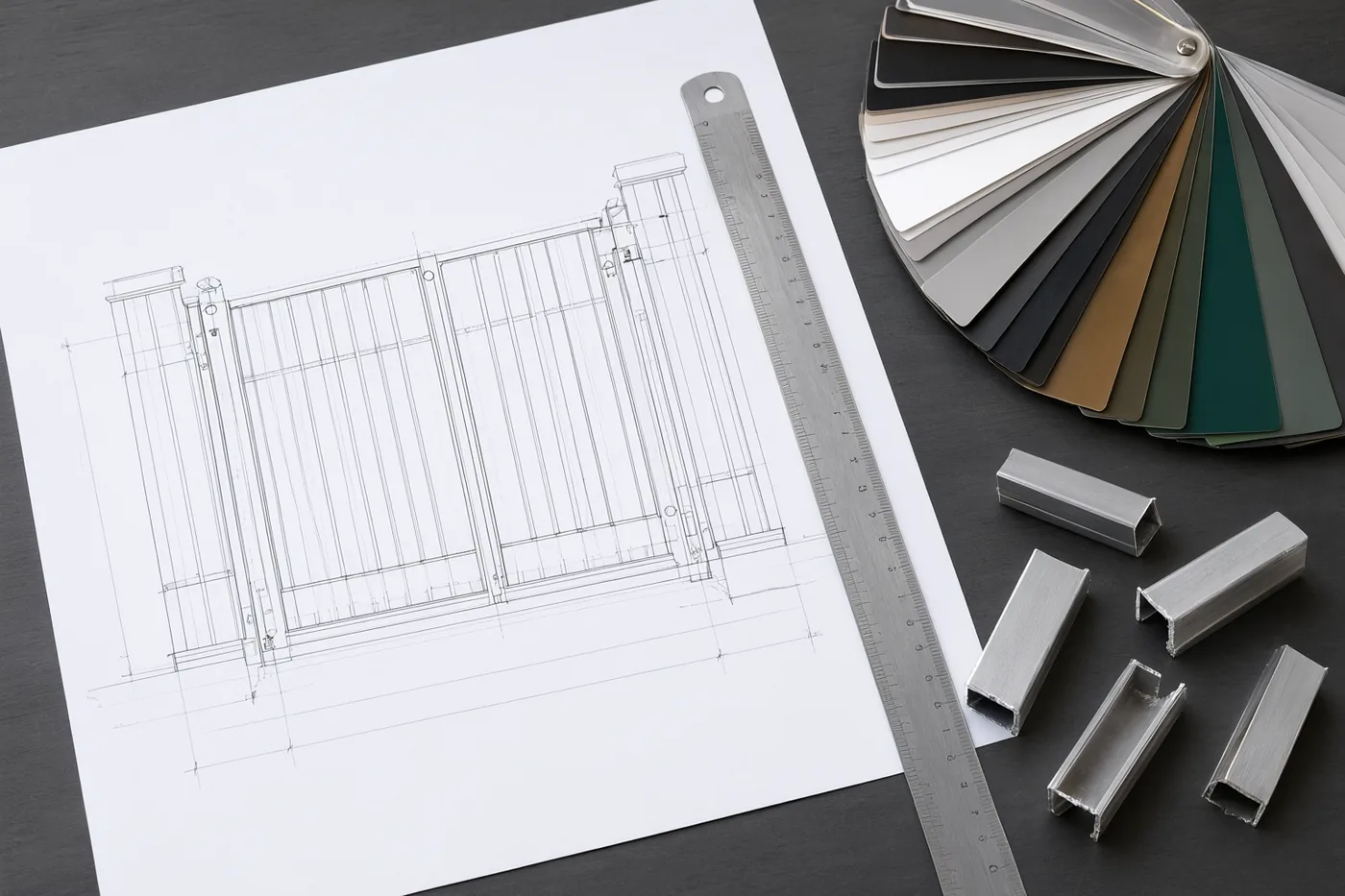
Custom heights, unusual infill, wood-grain finishes, an odd opening direction? We draw it in CAD, send you drawings and renderings, and don't start production until you sign off. Production typically runs 15 to 20 days after drawing approval. The process is laid out on our custom aluminum gates page.
When steel is still the right call
Aluminum doesn't win every job. Anyone who says so is selling something.
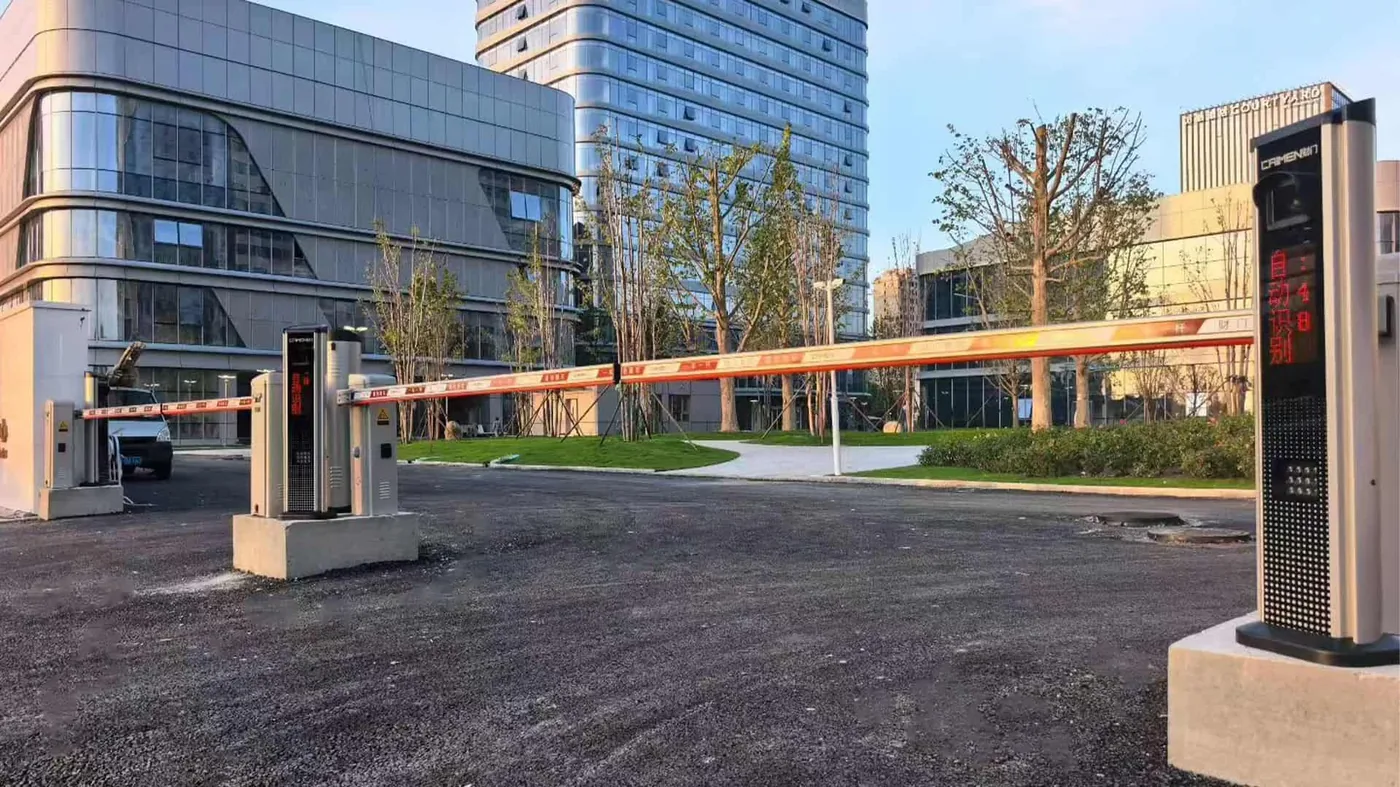
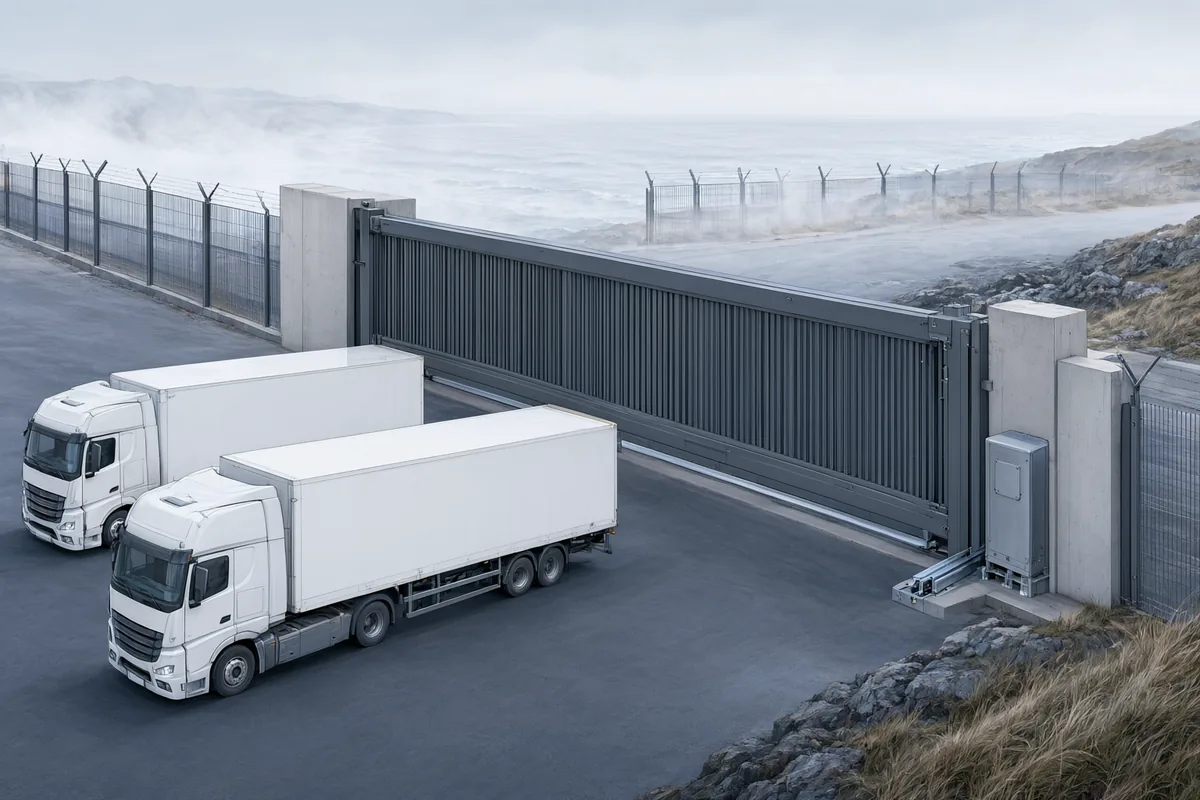
Anti-ram work is steel territory, because mass and toughness are the point. Our own road blockers are built from Q235 steel, and our high-speed barrier gates use a 1.5 mm carbon steel cabinet with a fluorocarbon powder coat. On a dry inland site, a short gate that rarely moves can come in cheaper in steel, and any local welder can fix it. Tight budget, two openings a day? Galvanized steel is a fair pick.
Say you're specifying a logistics yard 300 m from the coast, 15 m opening, trucks every few minutes. Aluminum, easily. Now imagine a government entrance that has to stop a vehicle. That's steel, often paired with an aluminum gate for the daily traffic.
How to decide
- Measure the opening. On a long sliding leaf, steel's extra weight drives up everything else.
- Find out how far you are from salt water, and which way the wind usually blows.
- Count cycles per day. Size alone won't tell you enough.
- Get the coating brand, grade and test report, plus profile inspection reports.
- If the site needs both, keep the access gate and the crash barrier as separate items.
See the full range on our products page. Or send your site drawing to [email protected] through the contact page, and we'll suggest a profile and coating to fit it.
Sources
- Characteristics of Aluminum - Kobe Steel (KOBELCO)
- HDG in Coastal Climates - American Galvanizers Association
CAIMEN product figures come from our installation manuals and engineering documentation.